
India that is Bharath – may all citizens take pride in singing – Vandematram — I bow to thee, O Mother Bharathi!
Congress chose political and religious accommodation in 1937 by limiting the public use of Vande Mataram to its first two stanzas.Both Nehru and Gandhiji as always took a pro minority stand and reduced vandematharam to a song – a body blow to the the soul and spirit of Indian freedom struggle. This “sowed the seeds of Partition in 1947” !
On November 7, 1875, Bankim Chandra Chattopadhyay composed Vande Mataram, inspired by Bengal’s spirit of Durga Puja. This six-stanza hymn fused Sanskrit grandeur with Bengali melody to become a spiritual and patriotic anthem that fueled India’s freedom struggle !
Inspired by the tradition of Durga Puja, Chatterjee imagined the motherland as a living goddess watered by rivers, cooled by southern breezes, adorned with harvests, yet armed with a hundred arms to crush tyranny. For his call for obeisance to the motherland, Chatterjee fused Sanskrit grandeur with Bengali melody, creating an immortal poem rooted in ancient India.
Rabindranath Tagore, a literary giant, stood before the 1896 Calcutta Congress and rendered the song in his own haunting melody – composed the tune in Shantiniketan’s mango groves – Later promoted his own song – jana gana mana to be the national anthem!
On August 14, 1947, when the Constituent Assembly met in the Parliament to announce the end of the British Raj, the proceedings began with Vande Mataram, sung by Sucheta Kriplani. Pandit Omkarnath Thakur rendered the full six stanzas on All India Radio at midnight, August 15, 1947 — India’s first breath of freedom carried on airwaves.
Vande Mataram is not just a song; it is the collective consciousness of India and was the rallying cry of freedom fighters during the struggle for independence.Har Ghar Tiranga 2026 is dedicated to the spirit of 150 Years of Vande Mataram, celebrating patriotism, pride in the Tiranga, and the love for the motherland embodied in our National Song.
Vandematharam – the mere utterance of these two words stirred the hearts of countless Indians, inspiring millions to join the nation’s struggle for independence and thousands to sacrifice their lives. Vande Mataram has found a deeper place in the hearts of the people.
“Vande Mataram” became the emblem of India’s struggle for independence, encapsulating the collective aspiration for self-governance and the emotional connection
between the populace and their homeland – transcended regional barriers to serve as the anthem of
national awakening.
Sonia Gandhi was born in Italy and later became an Indian citizen. Whether someone born outside India can fully understand the deep emotional and civilisational significance that many Indians attach to Maa Bharati is a legitimate subject of public debate. For many Indians, Vande Mataram is not merely a song or political slogan; it carries a profound historical and emotional association with the freedom struggle and the idea of the motherland. That sentiment deserves to be understood and respected, regardless of political affiliation.
Vande Mataram is a historic expression of India’s civilisational identity and the sacrifices of freedom fighters. Restricting or avoiding it represents a weakening of national sentiment.
Congress’s 1937 compromise represented appeasement of the Muslim League and suggested that the willingness to compromise on Vande Mataram was part of the political trajectory that eventually produced Partition.
Vande Mataram played an enormous role in India’s freedom movement. Muslim League leaders objected to portions of the complete song on religious grounds.
Congress leaders, including Nehru and Gandhi did not make any attempt to make the minorities understand the essence and the legacy of vandematham and the sensitivity surrounding vandematharam.
I have always held the song Vande Mataram in high regard. I like Jana Gana Mana too. Since childhood, I have been an ardent fan of Vande Mataram. It addresses the mother and there is nothing greater than mother. Mother is nature. I have been a ‘feminist’ in that way. I have always believed in treating women with great respect.
The poem is an ode to the mother Bharathi – a pan-Indian, nationalist salutation to Mother India during the Indian independence movement.
The first two verses of the song make abstract reference to the “mother” and “motherland”, without any religious connotation. However, later verses mention Hindu goddesses such as Durga and Lakshmi.
The references to Hindu deities became a point of contention. Mohammad Ali zinnah in 1937 raised serious objections on behalf of Muslims. The Indian National Congress, on suggestion of Mahatma Gandhi and Rabindranath Tagore and Nehru, adopted the first two stanzas of the song.
We are one nation!
Many feel that the spirit of patriotism has gotten lost with time. I think the answer may be a bit more complex than you think. Congress has, over time, appeared to lose sight of its broader nation-building agenda, with minority appeasement increasingly taking precedence over a more inclusive vision of national development and unity.”
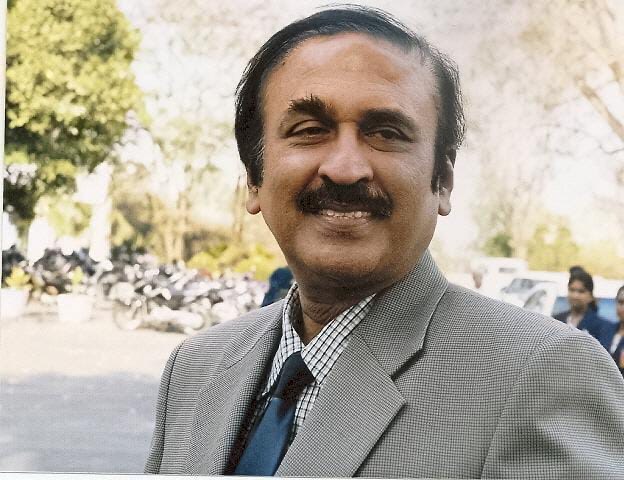
Dr N Prabhudev
Former Director Sri Jayadeva institute of Cardiology
Former VC of Bangalore university
Former Chairman Karnataka state Health Commission
nprabhudev@gmail.com

More Stories
From Engineering to Khaki: R. Hithendra’s Three-Decade Journey in Police Service
Permanent Solutions to Bengaluru’s Civic Issues Are Government’s Aim: CM
Bengaluru West Corporation to Prepare Solid Waste Management Micro-Plans for All Wards