
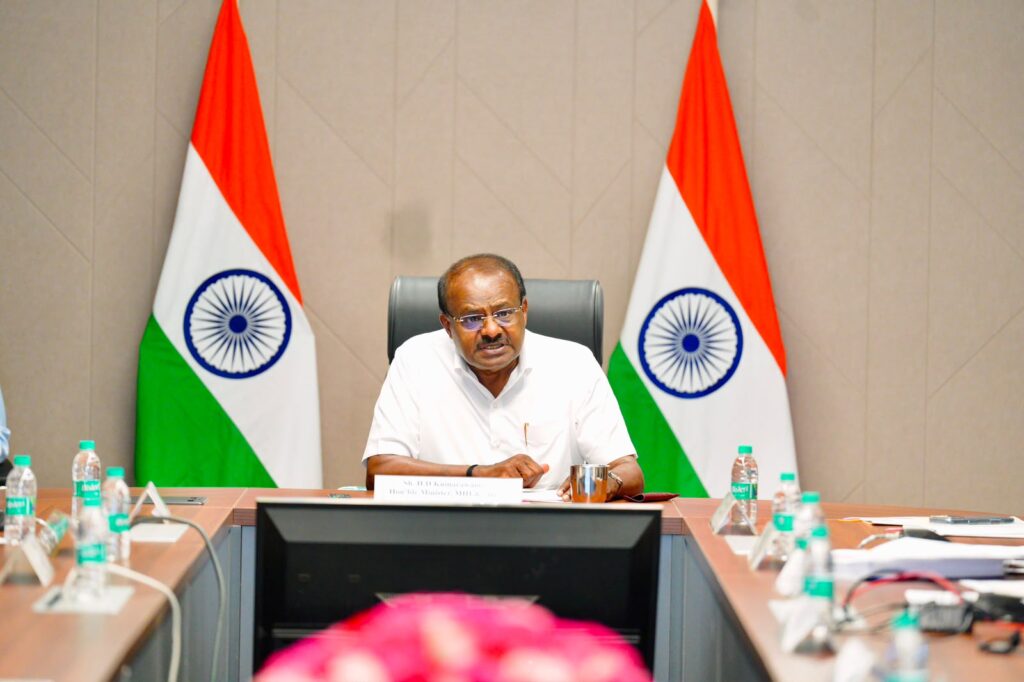
India Must Build Complete Domestic ACC Component Ecosystem: H.D. Kumaraswamy
HDK Hears Industry Concerns, Assures Full Support to Strengthen ACC Component Ecosystem
ACC Demand Projected to Reach 236 GWh by 2032; Domestic Manufacturing a Strategic Imperative
Government Will Extend All Possible Support to Address Industry Challenges: Kumaraswamy
Bengaluru Express
New Delhi | July 9, 2026
Union Minister for Heavy Industries and Steel H.D. Kumaraswamy on Wednesday chaired a comprehensive stakeholder consultation on promoting the domestic manufacturing of components for Advanced Chemistry Cells (ACC) in India and stressed the need to build a robust, integrated and globally competitive battery manufacturing ecosystem in the country.
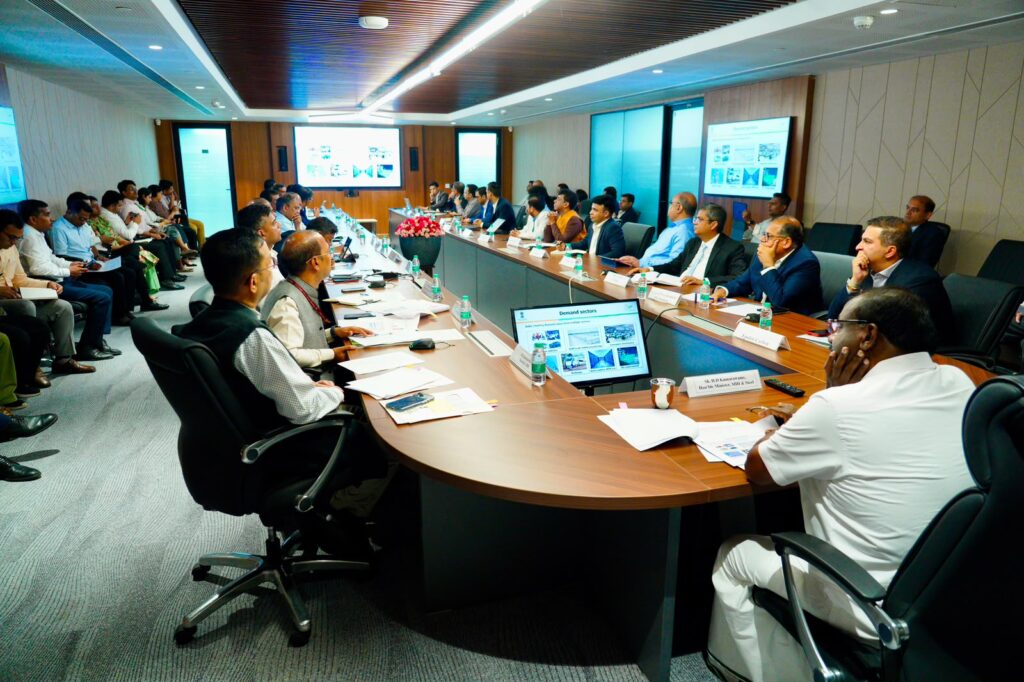
Senior officials of the Ministry of Heavy Industries and over 25 stakeholders representing battery and component manufacturers, research institutions, government bodies and industry associations participated in the consultation.
The meeting focused extensively on the present status of India’s ACC industry, domestic manufacturing capabilities, critical component requirements, investment and expansion plans, technology access and the challenges confronting manufacturers.
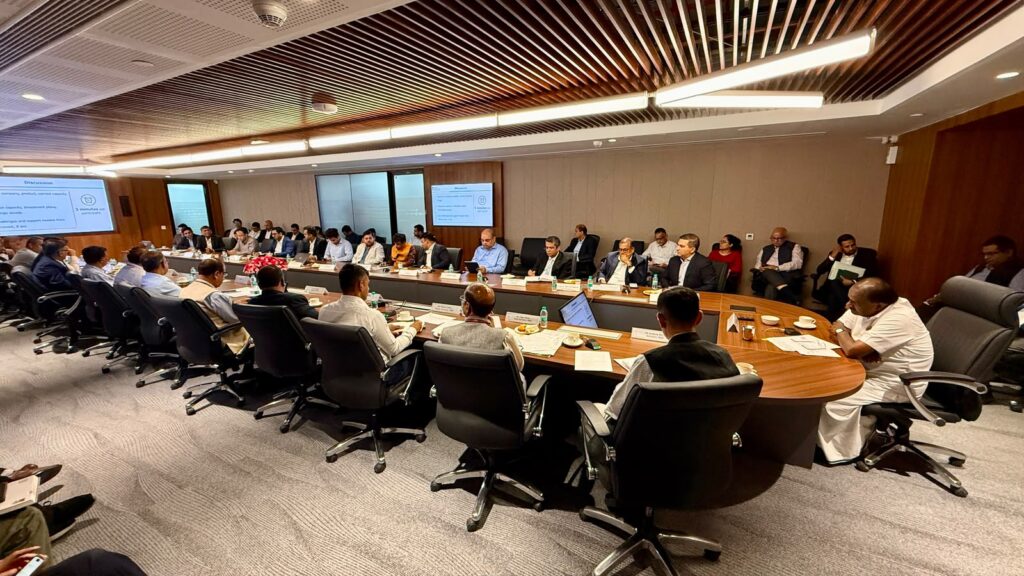
Addressing the stakeholders, Kumaraswamy said India was at a crucial stage in its energy transition journey, with demand for advanced batteries rising rapidly across electric mobility, grid storage, consumer electronics, telecommunications, data centres and other emerging sectors.
“India’s requirement for Advanced Chemistry Cells is projected to reach nearly 196 GWh by 2030 and further increase to approximately 236 GWh by 2032. This represents an enormous industrial and economic opportunity, but it also presents a strategic challenge that must be addressed with urgency,” the Union Minister said.
Kumaraswamy observed that manufacturing battery cells alone would not be sufficient to build a self-reliant domestic battery industry. He underlined the need to strengthen the entire value chain, covering raw and intermediate materials, critical battery components, manufacturing equipment, testing infrastructure, recycling, research and development and skilled manpower.
Critical ACC components, including cathode active materials, anode active materials, separators, electrolytes, current collectors and binders, continue to remain significantly dependent on imports. The consultation also noted that components account for more than 75 per cent of the overall cost of an LFP cell, while domestic ACC cell manufacturing currently captures only about 20-25 per cent of domestic value addition.
The stakeholders gave detailed presentations on their current manufacturing capacities, proposed expansion plans, investment requirements and access to technology. They also highlighted the limitations and operational challenges confronting the sector.
Among the major concerns raised were high capital and operating expenditure, dependence on imported manufacturing equipment, high energy consumption, aggressive global market pricing, restrictions on technology access and prolonged qualification cycles of 12 to 18 months with battery cell manufacturers. Global supply chain vulnerabilities and export controls on critical battery technologies and components were also discussed in detail.
Kumaraswamy heard the concerns and suggestions put forward by the stakeholders and assured them of all possible support from the Ministry of Heavy Industries in addressing genuine industry challenges and creating an enabling environment for domestic manufacturing.
“The Government can provide policy direction and create an enabling framework, but the success of this mission will depend equally on active collaboration between industry, research organisations and other stakeholders. We must work collectively to build a complete domestic ACC ecosystem,” the Minister said.
The consultation also reviewed the significant gap between India’s existing component manufacturing capacity and the projected requirements by 2032. Against a projected requirement of 4.72 lakh tonnes per annum of LFP cathode active material by 2032, the current capacity stands at 5,775 tonnes per annum. Similarly, domestic capacity remains substantially below projected requirements for anode active materials and electrolytes, while current domestic manufacturing capacity for separators and copper foil remains negligible.
The Union Minister said the Ministry of Heavy Industries had been actively working to strengthen India’s ACC manufacturing ecosystem through strategic policy interventions, including the Production Linked Incentive Scheme for Advanced Chemistry Cell Battery Storage.
He said the initiative to promote domestic manufacturing of ACC components was aligned with Prime Minister Narendra Modi’s vision of *Aatmanirbhar Bharat*, sustainable industrial growth, energy security, clean mobility and India’s broader climate commitments.
“Reducing import dependence and building resilient domestic supply chains is a strategic necessity. India must develop capabilities across the entire battery value chain and emerge as a globally competitive manufacturing hub for advanced battery technologies,” Kumaraswamy said.
The Minister reiterated that the Ministry would continue its engagement with industry and other stakeholders to understand sectoral challenges, identify policy interventions and unlock new opportunities for investment, technology development and domestic manufacturing.




More Stories
From Engineering to Khaki: R. Hithendra’s Three-Decade Journey in Police Service
Permanent Solutions to Bengaluru’s Civic Issues Are Government’s Aim: CM
Bengaluru West Corporation to Prepare Solid Waste Management Micro-Plans for All Wards